SERDES PHY IP
Robust and scalable SERDES IP, supporting data rates up to 112G, tailored for data center, 5G, and high-bandwidth embedded systems.
Learn more
Our IPs are optimized for next-generation applications across AI, HPC, automotive, mobile, and edge devices.
Built on advanced process nodes and designed with area-efficient architectures, our IPs help customers maximize integration flexibility while minimizing power and footprint.

Robust and scalable SERDES IP, supporting data rates up to 112G, tailored for data center, 5G, and high-bandwidth embedded systems.
Learn more
Ultra-low latency and best-in-class area & power efficiency, widely adopted in high-performance computing applications like data center, automotive, surveillance and mobile etc.
Learn more
Next-generation die-to-die connectivity supporting UCIe 2.0 standards, enabling chiplet-based designs with seamless interoperability and customizable IP tailored to customers’ SoC architectures.
Learn more
Comprehensive MIPI IP portfolio for camera and display interfaces, widely adopted in automotive, mobile, surveillance platforms based on superior power/performance/area competitiveness.
Learn more
High-speed PHY IPs supporting VESA and custom display protocols, delivering sharp performance for automotive infotainment, and industrial & consumer applications.
Learn more
Ethernet PHY IP solutions are optimized for low latency and high reliability in networking and automotive domains.
Learn more
High-speed, low-power sensor interface IP supporting SLVS-EC v3.0, ideal for image sensors in industrial & consumer cameras as well as surveillance.
Learn more
A low-power, high-performance solution compliant with USB 3.2 Gen2 standards, enabling fast and reliable data transfer for next-generation SoCs.
Learn moreQualitas Semiconductor’s SERDES PHY IP delivers a high-performance, low-power solution for high-speed interfaces up to 112Gbps. It supports diverse applications including AI accelerators, data centers, 5G infrastructure, and automotive SoCs.
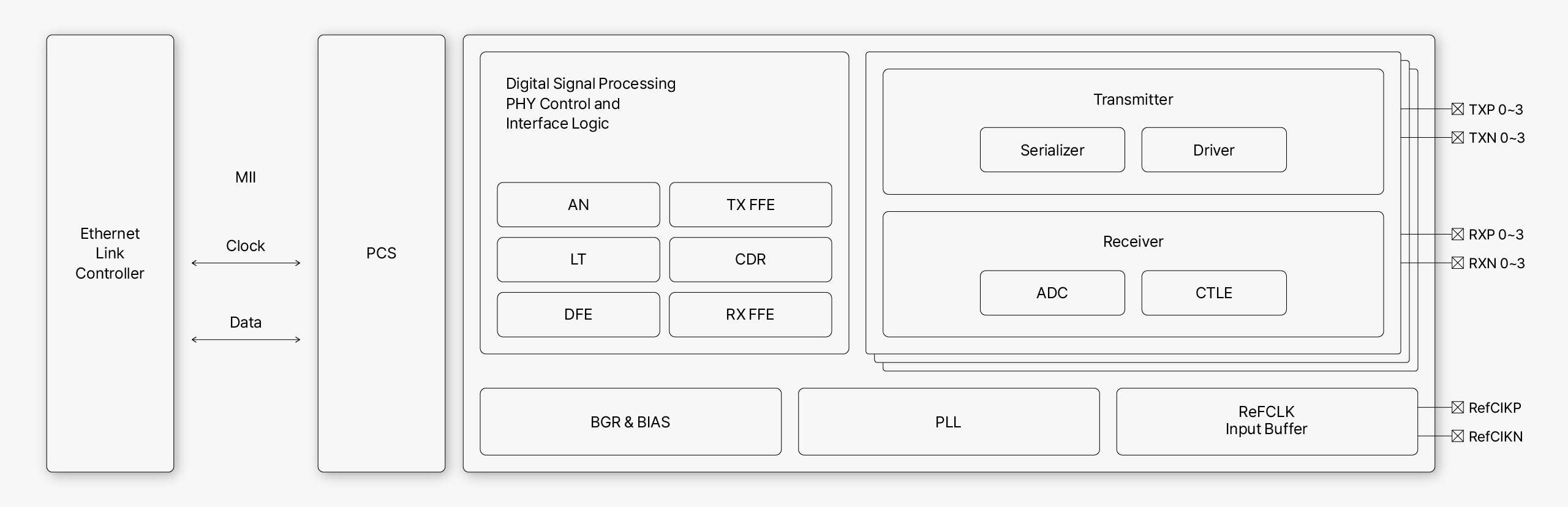
The Ethernet PHY IP is optimized for CEI-112G and supports 8b/10b encoding for Gen1/Gen2 and 128b/130b for Gen3/Gen4, ensuring accurate serialization and deserialization of data streams.
With robust equalization and proven interoperability, it maintains high signal integrity across lossy channels and is well-suited for advanced SoC integration.

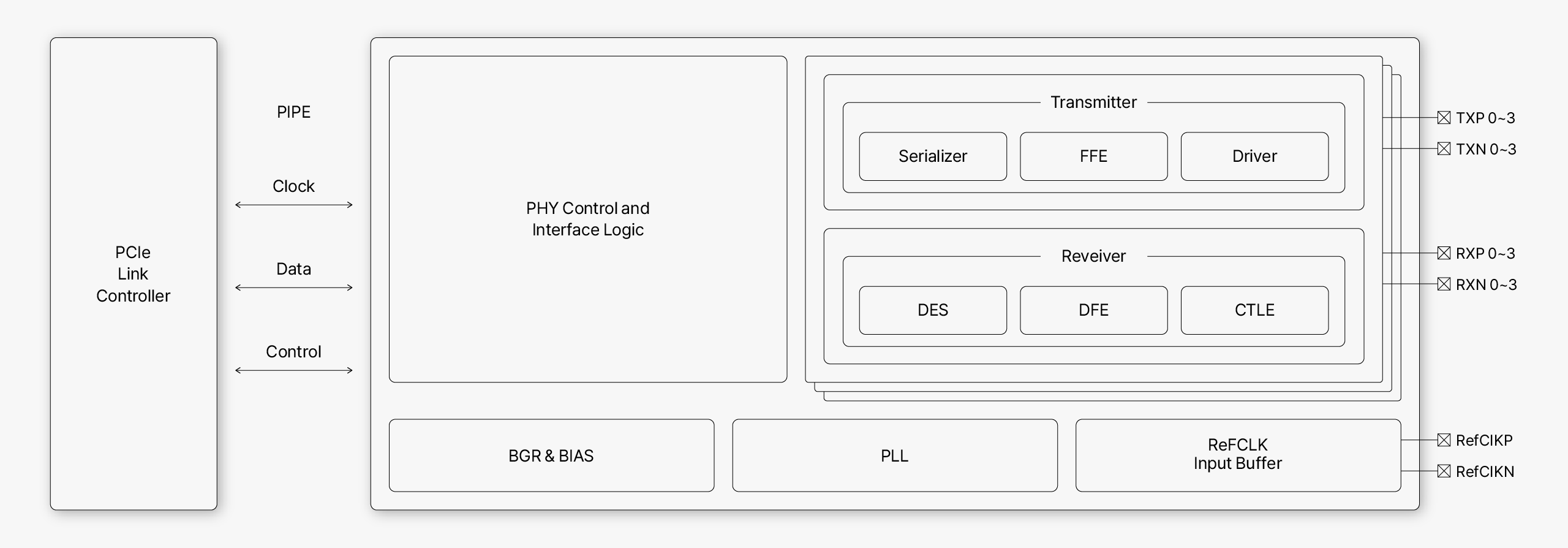
Accepts four 10-bit transmit characters (8b/10b) or four 8-bit data blocks (128b/130b)
Serializes data to differential outputs (TXP/TXN) at up to 16.0Gb/s per lane
Samples incoming serial data from differential inputs (RXP/RXN)
Deserializes into four 10-bit (8b/10b) or 8-bit (128b/130b) received characters
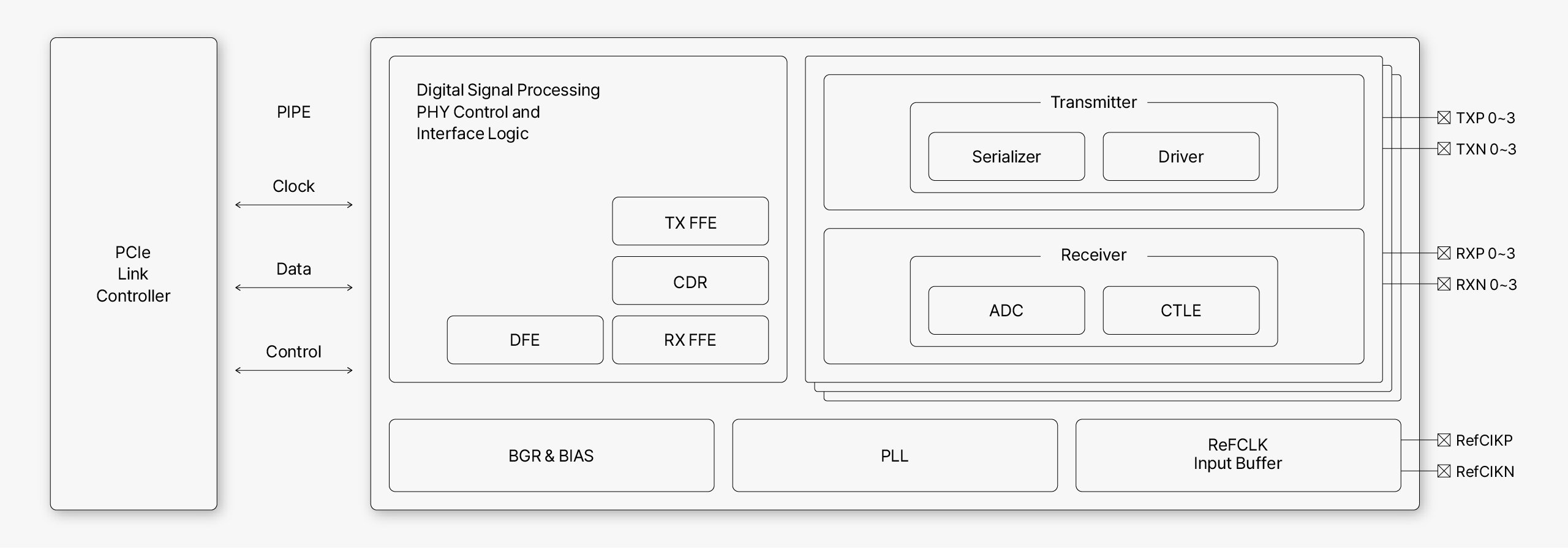
Qualitas Semiconductor’s PCIe PHY IP supports PCIe Gen 4.0, 5.0, and 6.0, and is validated through interoperability testing in collaboration with global partners,
ensuring a production-ready and reliable solution.
It offers a cost-effective, low-power, and area-efficient solution built on advanced FinFET CMOS technology, making it suitable for high-performance and
power-sensitive designs. The IP includes all necessary ESD I/Os and bump pads, and supports robust built-in self-test (BIST) features such as loopback and
scan test, enhancing both reliability and debug efficiency.

Qualitas Semiconductor’s PCIe PHY IP supports PCIe Gen 4.0, 5.0, and 6.0, and is validated through interoperability testing in collaboration with global partners,
Built on advanced FinFET process nodes, the IPs incorporate DSP-based equalization, low latency, and industry-proven interoperability—making them ideal for PCIe 6.0 and CXL-ready systems.
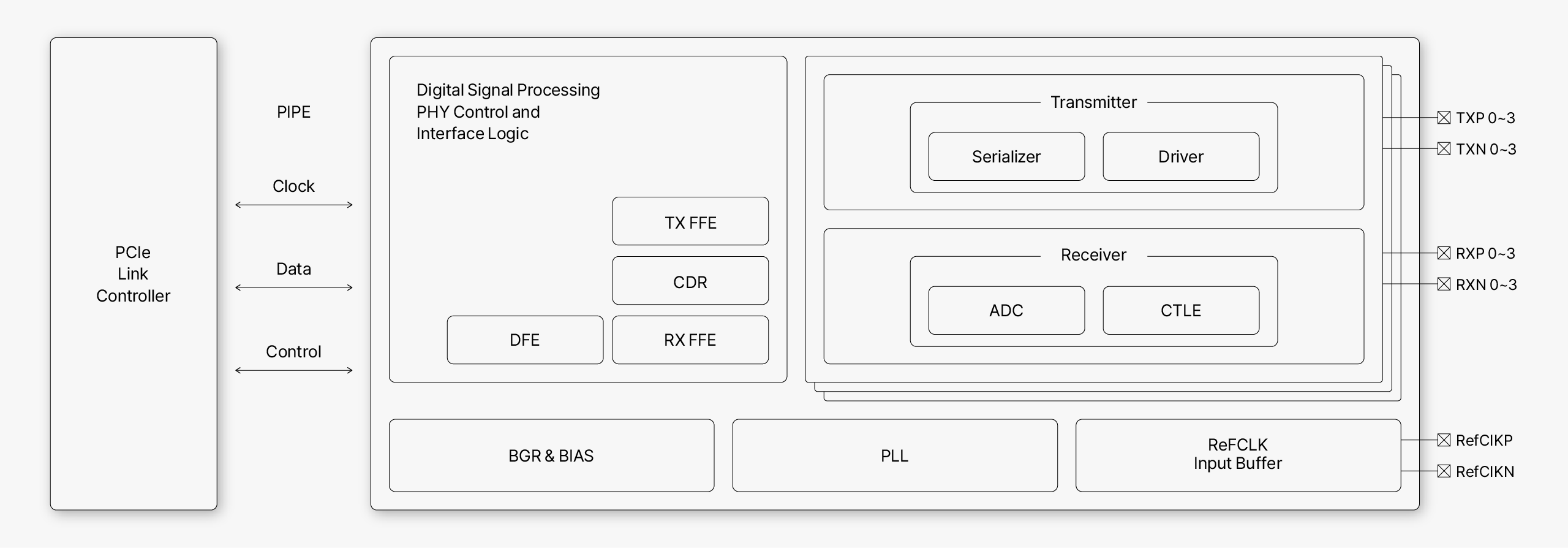
Qualitas Semiconductor’s PCIe Gen4.0 PHY IP offers a low-power, compact solution with proven performance and robust signal and power integrity, making it suitable for a wide range of high-speed interface environments. Optimized for seamless integration with controller IPs, it enhances design efficiency and reliability. Built-in self-test (BIST), loopback, and scan test features significantly improve debug capability, while optional delivery as a complete PCIe 4.0 subsystem meets diverse customer needs. This robust IP has been successfully deployed in mass-production for applications including data centers, automotive systems, and surveillance devices.
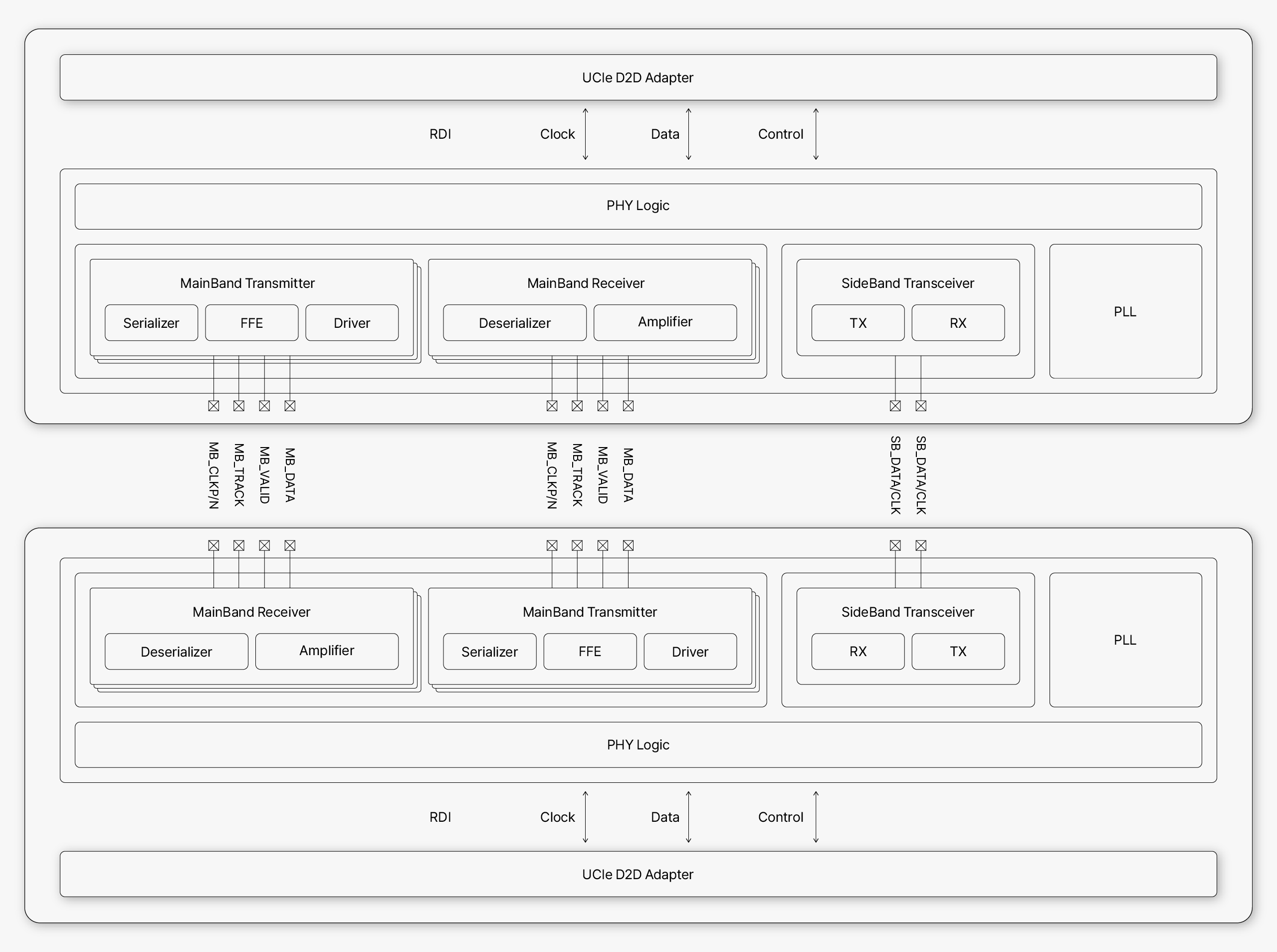
Qualitas Semiconductor’s UCIe PHY IP enables high-bandwidth, low-latency die-to-die communication across chiplets,
fully compliant with the Universal Chiplet Interconnect Express™ (UCIe™) version 2.0 standard.
It supports both Standard and Advanced package types, offering the flexibility needed to build scalable, heterogeneous systems.
Designed for AI accelerators, data center SoCs, and custom multi-die architectures, this PHY IP delivers robust signal integrity and integration-ready support for next-generation chiplet-
based designs.

Qualitas Semiconductor’s MIPI D/C-PHY Combo IP is a mass-proven solution supporting both MIPI D-PHY v3.0 and C-PHY v2.1 standards. The IP is available with our own optional CSI-2 Receiver and DSI-2 Transmitter/Receiver controller IPs, delivering a tightly integrated PHY + Controller package that simplifies system design and accelerates product development.

Qualitas Semiconductor’s C/D-PHY Combo IP delivers top-tier PPA characteristics and is mass production-proven across multiple customer SoCs.
It is available as a complete subsystem with Qualitas’ own CSI-2 and DSI-2 controller IPs, enabling streamlined integration for camera and display applications.
The IP can be customized to meet specific SoC requirements, providing design flexibility for diverse system needs.
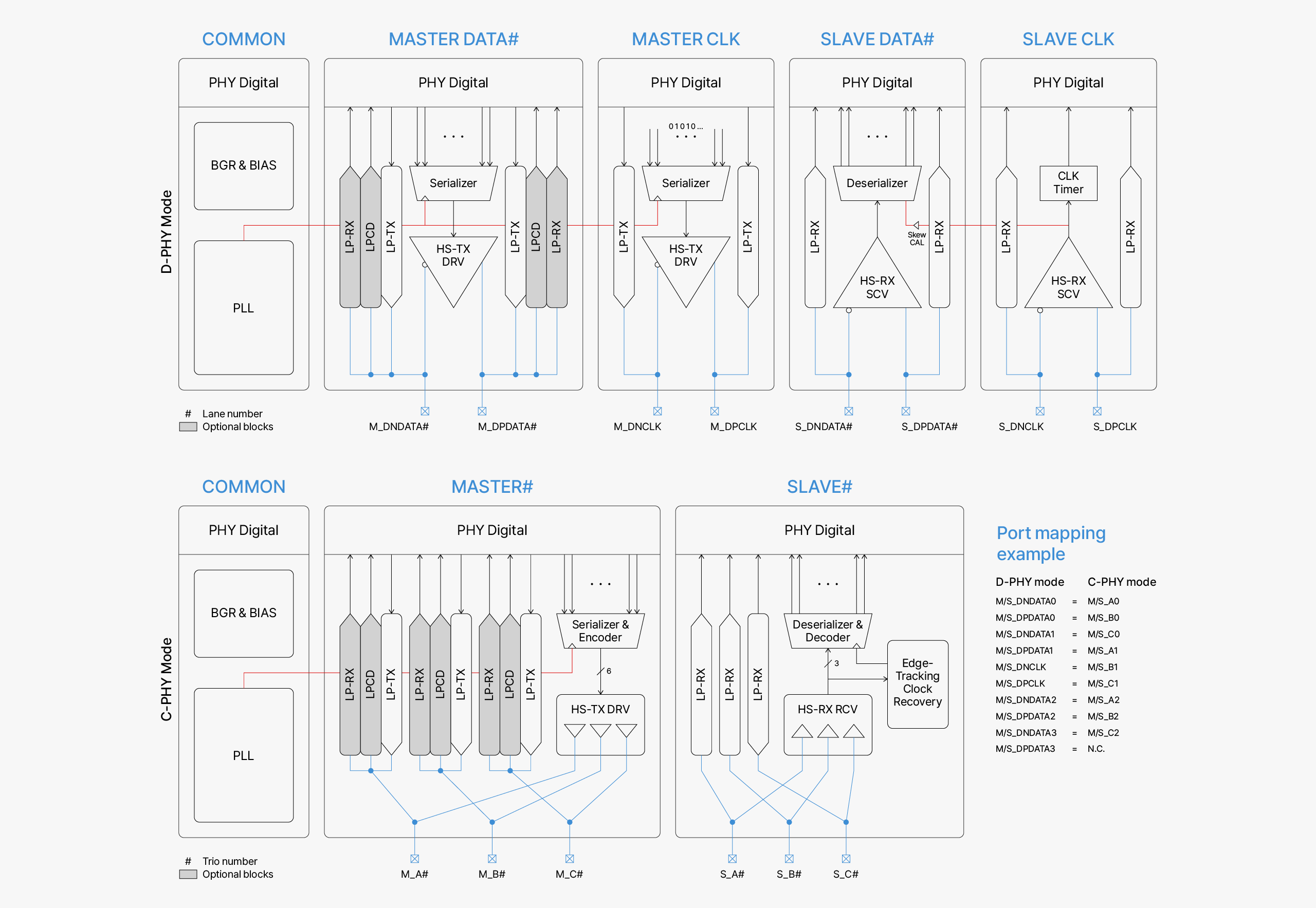
D-PHY TX/RX : 80Mb/s ~ 9.0Gb/s
C-PHY TX/RX : 80Ms/s ~ 8.0Gs/s
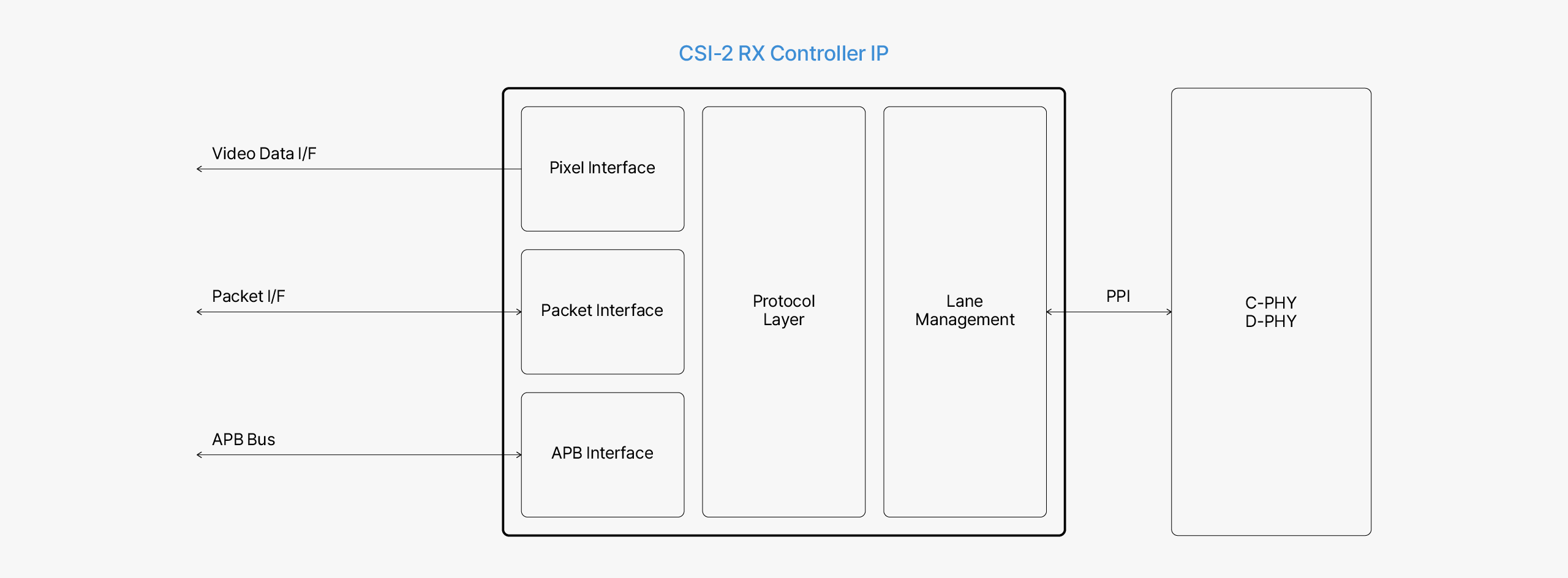
CSI-2 RX IP supports both C-PHY v1.2 and D-PHY v2.0 interfaces, enabling flexible integration across a wide range of image sensor applications. With built-in link layer capabilities including error detection, lane merging, and pixel format support, this IP ensures reliable and efficient data capture in advanced camera systems. It also supports CSE v2.0, MIPI’s functional safety standard, enhancing system-level reliability for safety-critical applications.
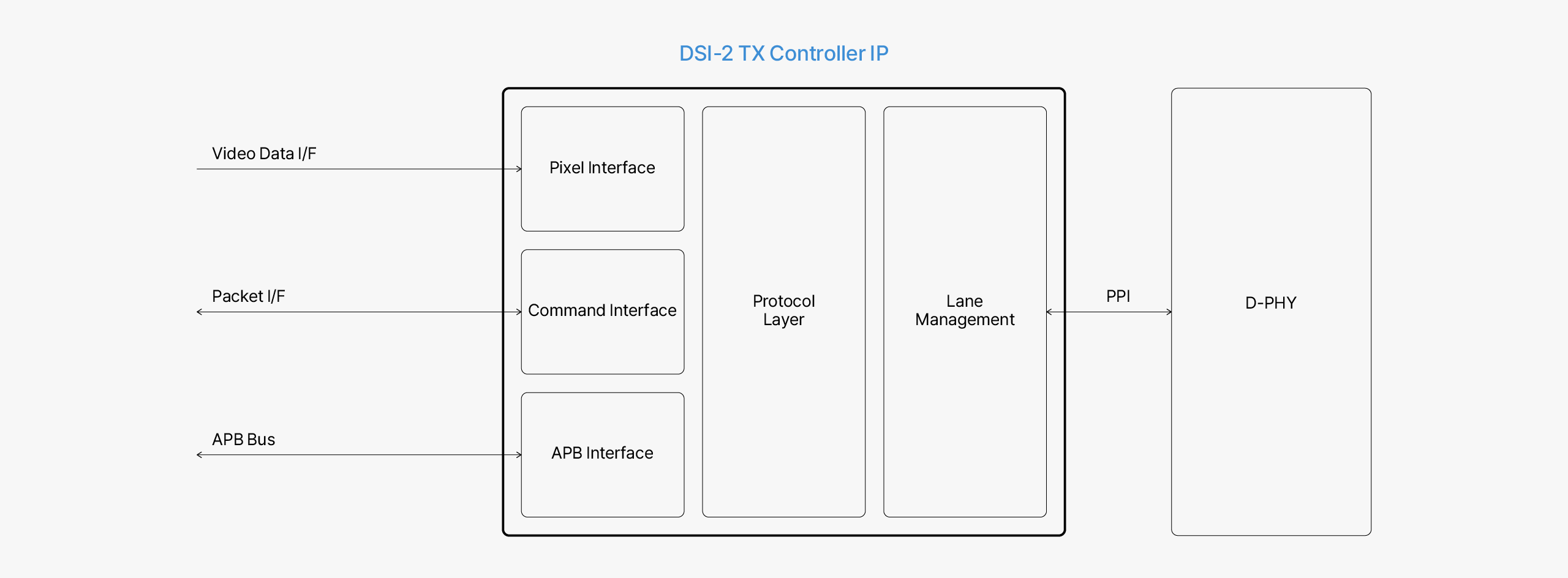
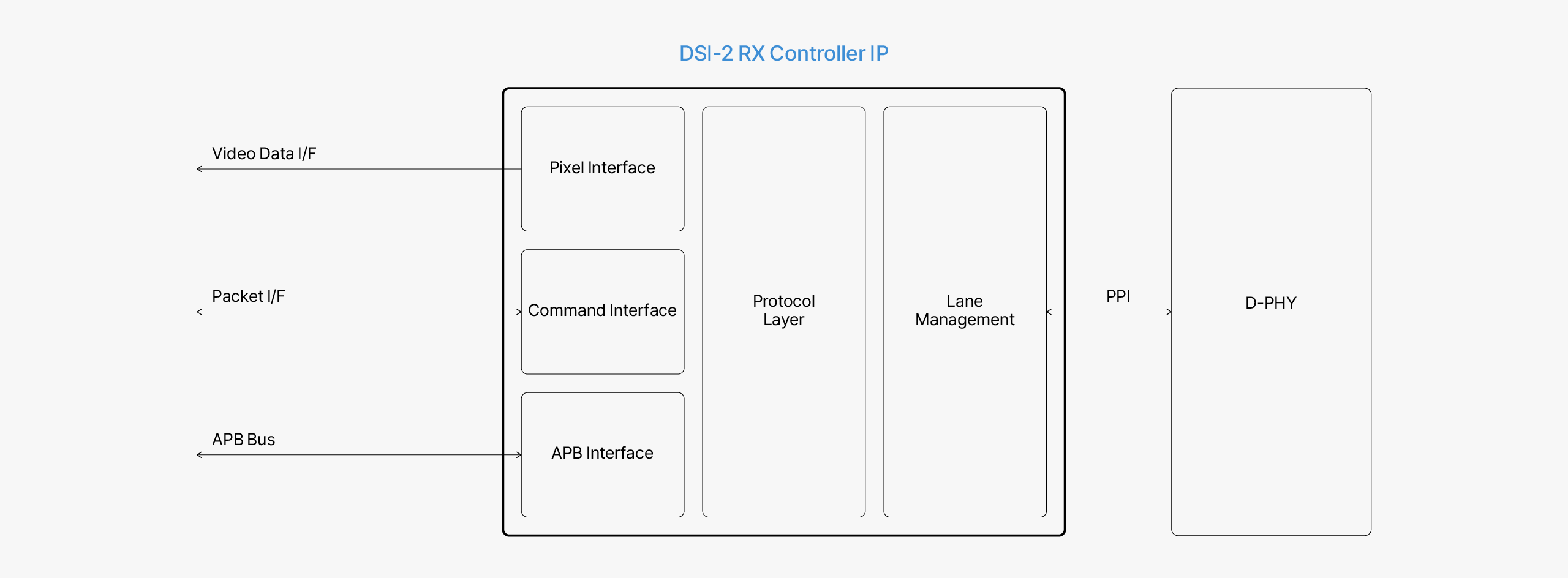
DSI-2 TX/RX IP supports both transmit and receive functions in line with the DSI-2 v1.1 and D-PHY v2.0 standards. Designed for modern SoCs integrating display functionality, it supports high-speed and low-power modes, lane configurability, and robust link features—making it ideal for advanced embedded display applications.
Qualitas Semiconductor’s Display IP portfolio offers high-performance, low-power solutions for both external and internal display interfaces.Qualitas Semiconductor’s Display IP portfolio offers high-performance, low-power solutions for both external and internal display interfaces.
It includes TX/RX PHY IPs for DisplayPort (DP) and Embedded DisplayPort (eDP), Intra-panel TX PHY IP, and Display Stream Compression (DSC) Encoder and Decoder IPs to support efficient high-resolution data transmission. All IPs are designed with global top-tier PPA efficiency, verified through mass production across customer SoCs, and validated for robust signal and power integrity in both on-chip and off-chip environments.

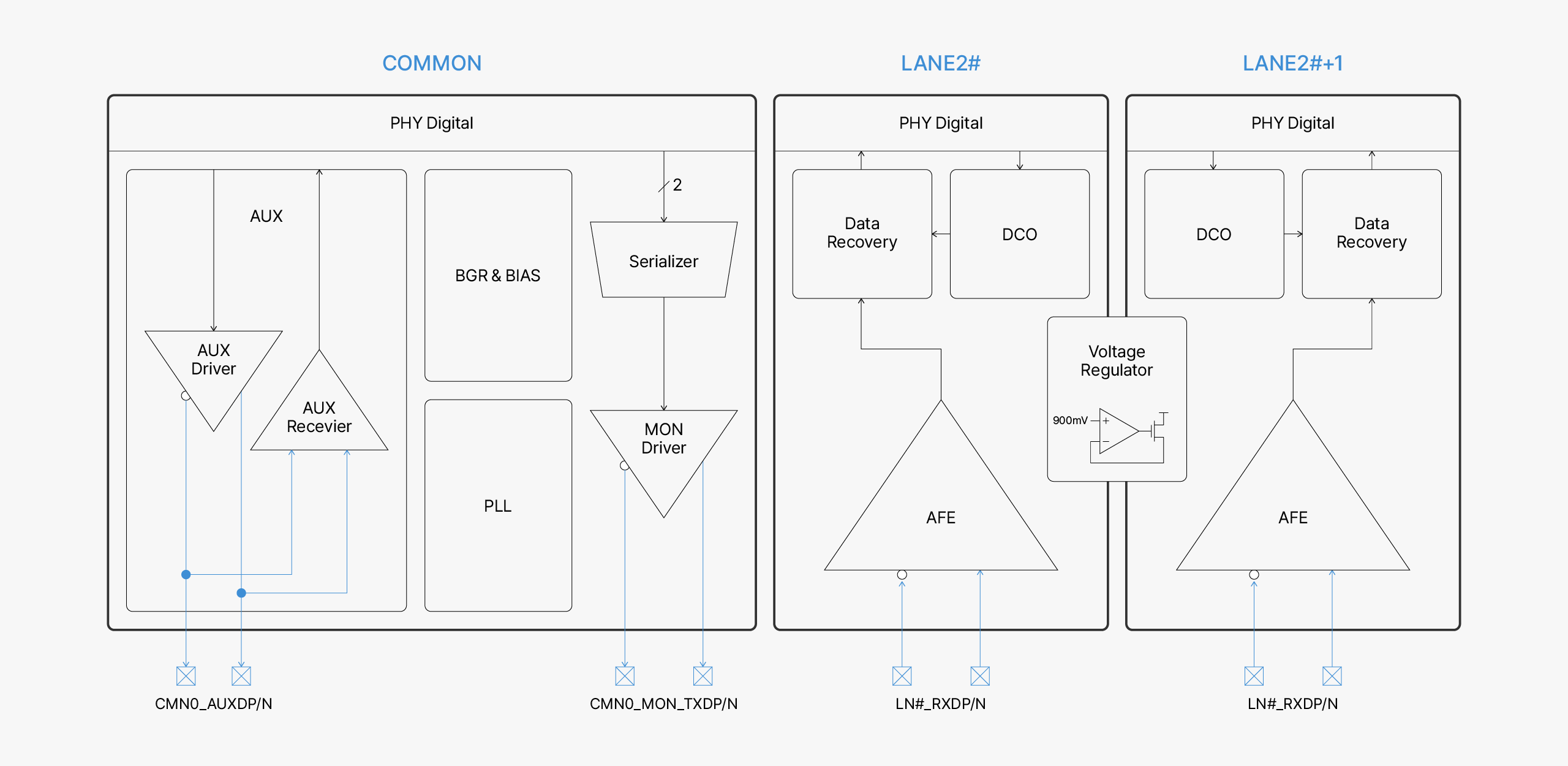
Qualitas Semiconductor’s DP and eDP TX/RX PHY IP provides a compact, low-power solution for high-speed external display interfaces. It supports various lane configurations, bidirectional data flow in both NS and EW directions, and is optimized for area efficiency on advanced FinFET nodes.
The IP includes built-in self-test features such as loopback mode and PRBS pattern checking, ensuring reliable performance and simplified validation in DisplayPort and Embedded DisplayPort applications.
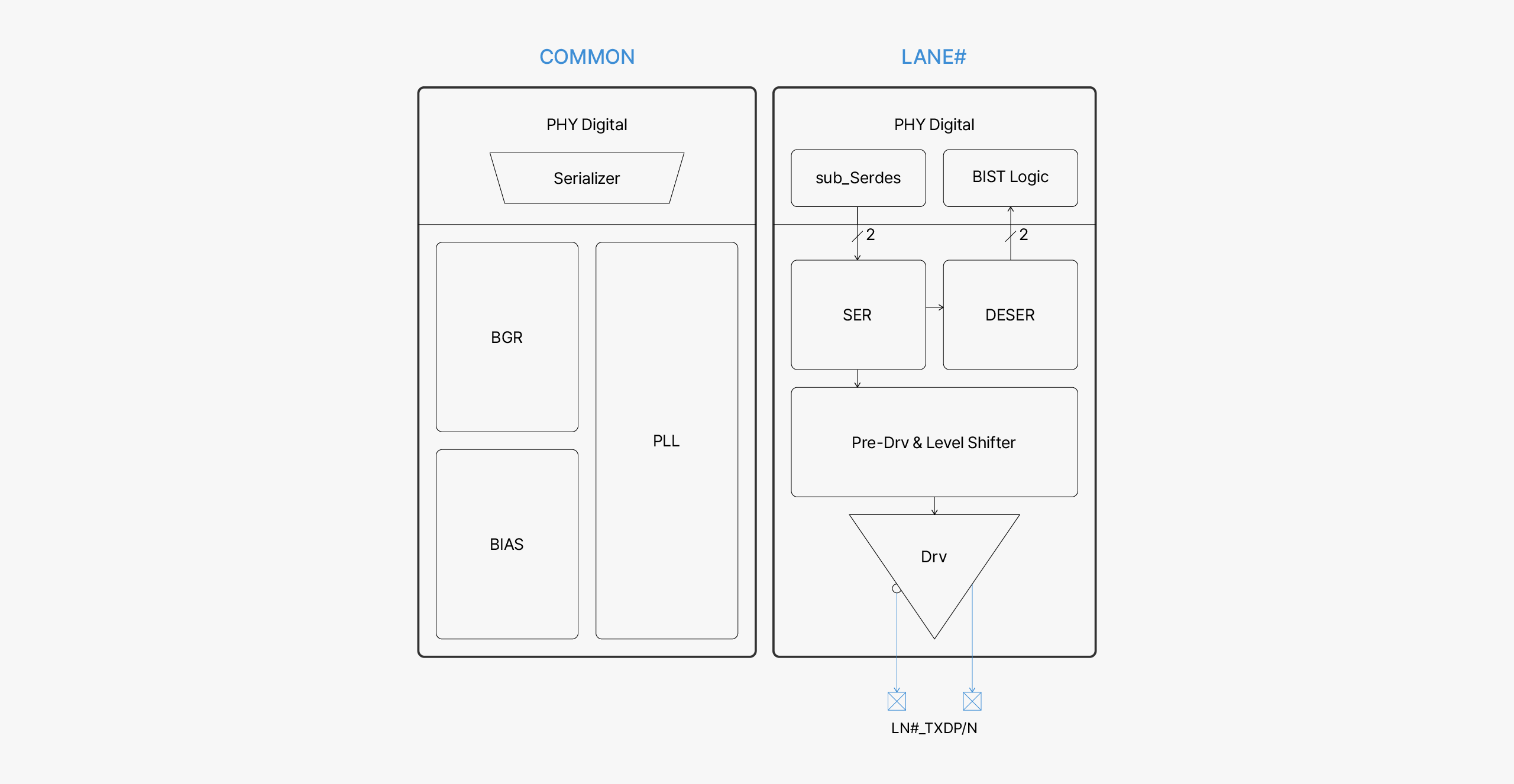
Qualitas Semiconductor’s Intra-panel TX PHY IP is a low-power transmitter designed for COG (Chip-on-Glass) and COF (Chip-on-Film) display modules. It supports data rates up to 4.0Gbps, utilizing a DC-coupled differential pair and a push-pull current mode driver with 600mV swing and 6dB pre-emphasis, enabling high-speed and reliable panel-to-display communication.
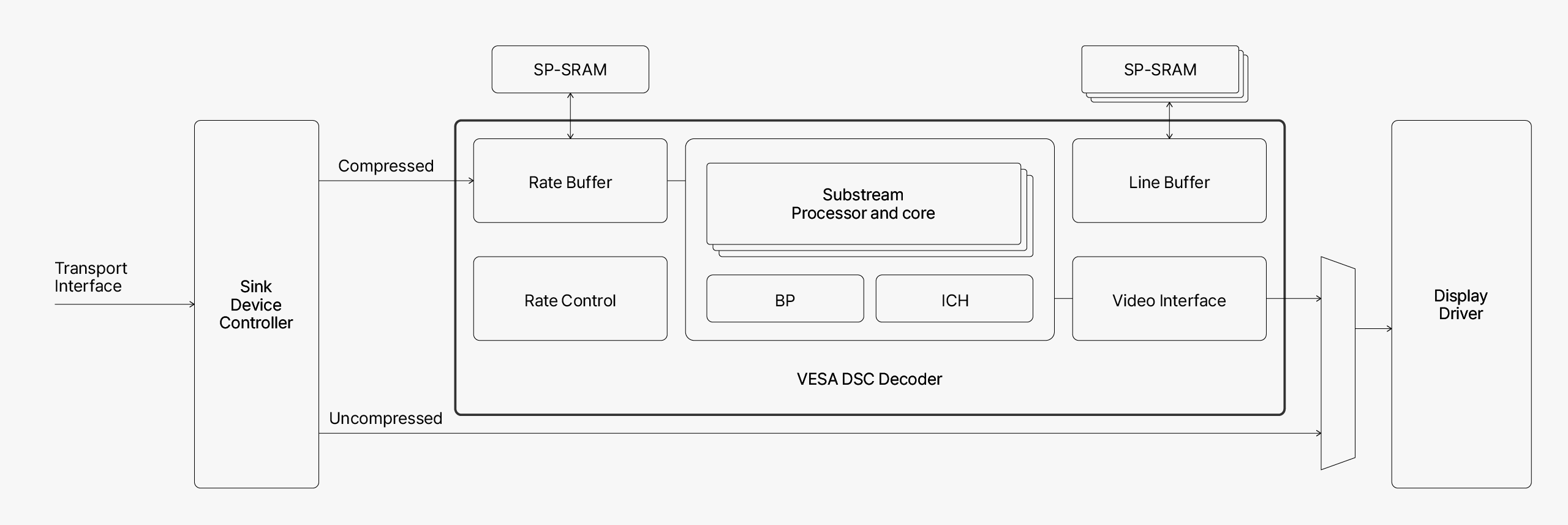
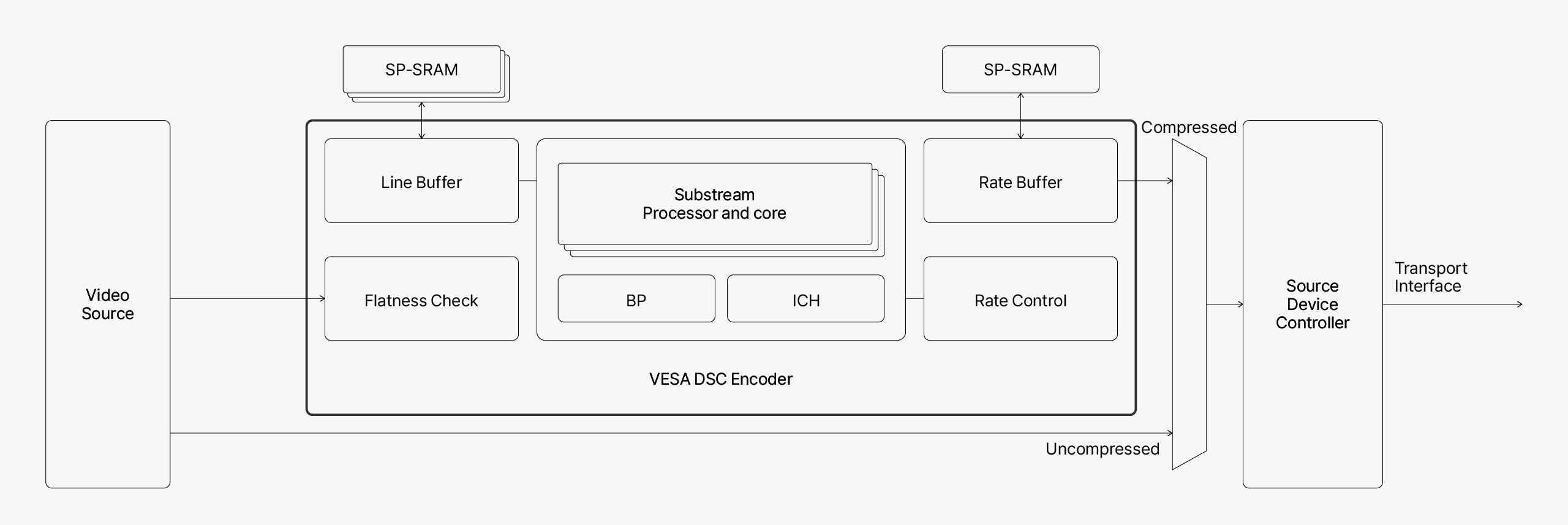
Qualitas Semiconductor’s DSC Decoder and Encoder IPs support visually lossless compression for high-resolution display systems, compliant with VESA DSC 1.2b.
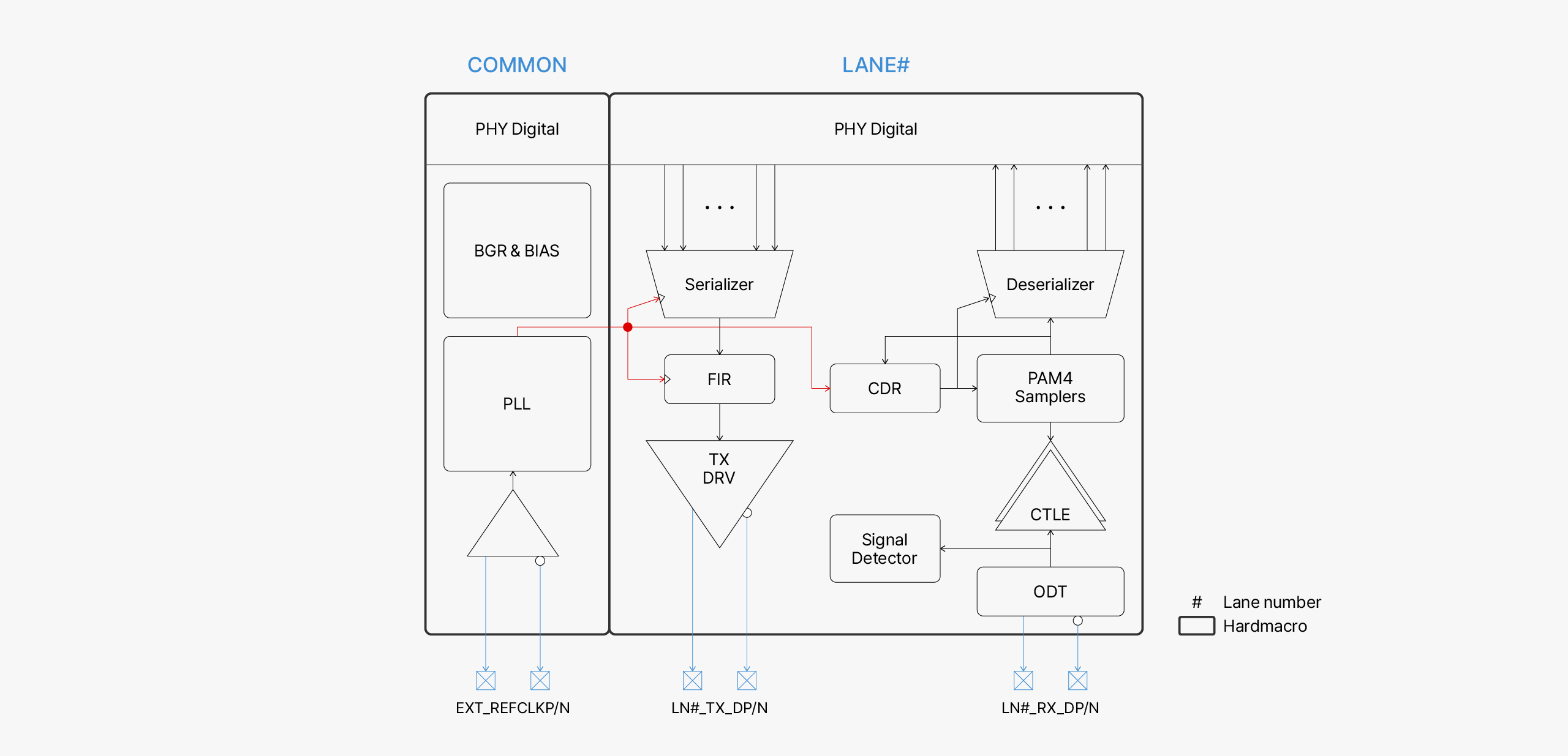
Qualitas Semiconductor’s 56G/64G PAM4 SERDES hard macro IP delivers a high-performance, low-power solution for high-speed serial interfaces. Supporting data rates up to 64Gbps per lane, it is optimized for next-generation Ethernet, PCIe, and custom high-speed links in AI accelerators, networking switches, and chiplet-based SoCs.With support for PAM4 and NRZ signaling, advanced equalization, and scalable lane architecture, this IP ensures robust signal integrity across long-reach and high-loss channels.

Qualitas Semiconductor’s SLVS-EC RX PHY IP is a high-speed, low-power receiver macro compliant with SLVS-EC v3.0 specification, enabling reliable parallel high-speed data capture from advanced image sensors. The IP supports both synchronous and asynchronous clocking, delivering flexible timing integration for diverse system architectures.
Optimized for applications requiring wide-lane, high-throughput parallel interfaces—such as machine vision, industrial cameras, and high-resolution imaging—this IP supports up to 10 Gbps per lane with a 40-bit parallel data bus and up to x24 lane configurations, providing scalable bandwidth options.

Qualitas Semiconductor’s USB Super-Speed+ PHY IP is a compact and power-efficient interface solution that fully supports the USB 3.2 Gen1 and Gen2 specifications, enabling data rates of 5Gbps, 10Gbps, and up to 20Gbps (Gen2x2). Compliant with PIPE interface standards and featuring support for both host and device modes, this PHY is ideal for SoCs targeting high-speed USB connectivity in mobile, consumer, and computing applications.
Designed with a low-power mixed-signal architecture and robust signal adaptation, the IP ensures reliable performance over varying channels while minimizing area and energy consumption. It supports full-duplex operation, built-in test features, and advanced signal monitoring for streamlined debugging and integration.